

I’ve always been curious about trends. Not because I want to jump on every new bandwagon, but because I want to understand what’s changing, why it matters, and what we can learn from it.
Recently, my curiosity led me to explore the latest trends in podcasting.
After more than a decade of hosting Book Marketing Mentors, I thought I had a pretty good handle on the podcasting world. Yet some of the statistics surprised me, and got me thinking about what these changes mean for nonfiction authors.
According to Edison Research’s Infinite Dial 2026, 167 million Americans, or 58% of the population aged 12 and older, consume podcasts every month. Another 130 million tune in at least once a week.
Those are impressive numbers, especially when you consider how many ways people can spend their time.
But what interested me wasn’t simply how many people are listening.
It was how podcasting is changing and what those changes could mean for authors who want to build authority, reach the right people, and create opportunities beyond selling individual books.
Here are five trends worth paying attention to.
1. Bigger Isn’t Necessarily Better
One of the most interesting developments reinforces something I’ve been teaching authors for years.
The right audience matters more than the largest audience.
Consider this. Edison Research reports that 68% of Americans between 35 and 54 consume podcasts monthly.
For authors writing about leadership, business, career development, and professional growth, this represents a substantial audience.
But reaching people in this age group isn’t enough. You still need to reach those who have a reason to care about your message.
Imagine you’ve written a book about leadership for new managers.
You could appear on a general business podcast with thousands of listeners or a smaller podcast serving 500 HR directors and corporate training professionals.
The larger show might introduce you to more people. The smaller one could introduce you to decision-makers who buy books for management programs, hire speakers, and bring trainers into their organizations.
Which opportunity would create more value for your book and business?
It’s a question worth considering before accepting your next podcast invitation.
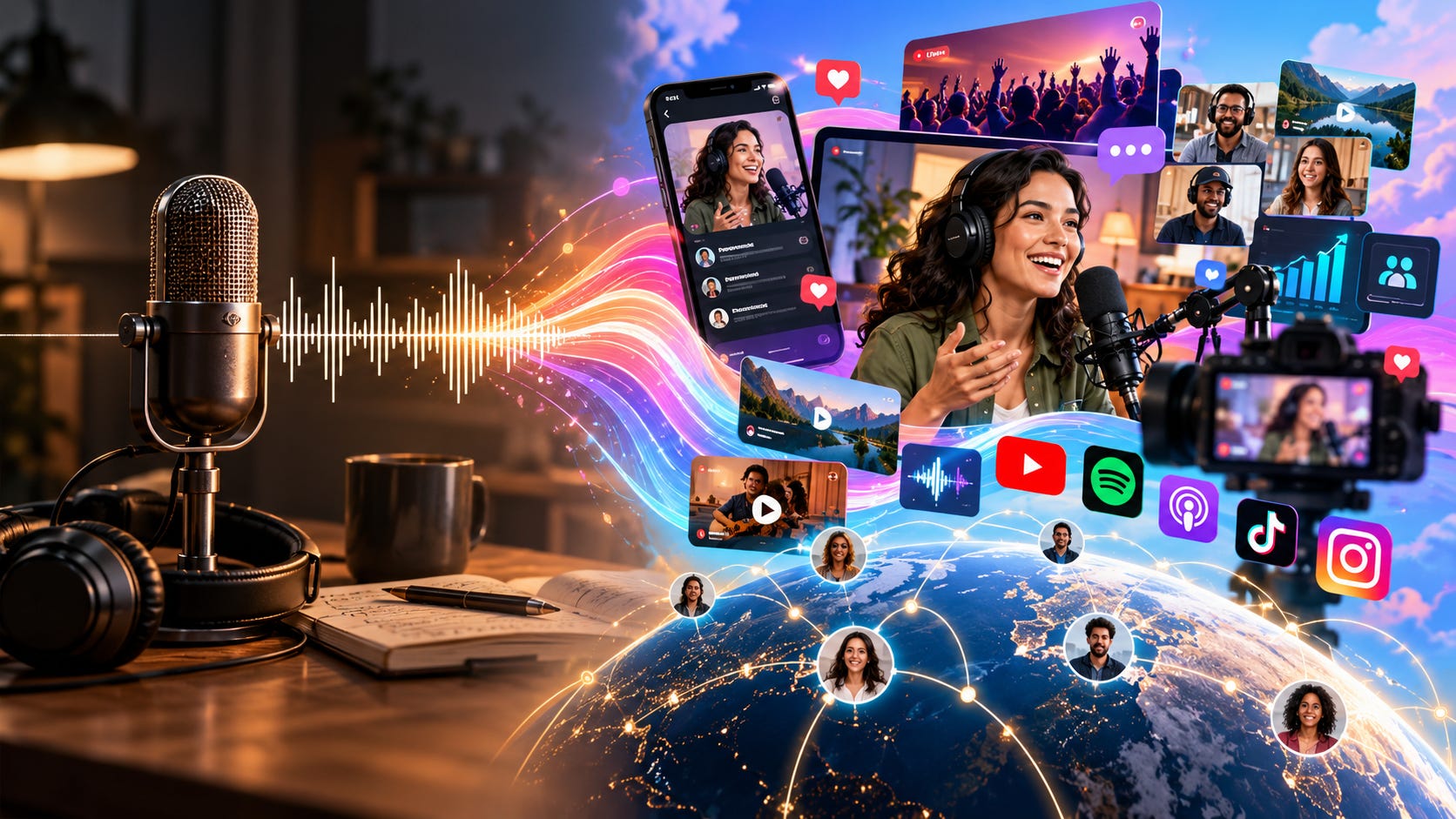
2. Podcasting Is Becoming More Visual
Here’s a statistic that caught my attention.
Among weekly podcast consumers in the third quarter of 2025, 82% watched video podcasts, while 78% listened to audio-only podcasts, according to Edison Research’s Podcast Consumer 2026.
The two experiences now overlap, with many people doing both.
YouTube has become a major player. In late 2025, 39% of weekly U.S. podcast consumers aged 13 and older said YouTube was the service they used most often for podcasts, compared with 20% for Spotify and 11% for Apple Podcasts.
This doesn’t mean authors need to rush out and buy cameras, lighting, and expensive production equipment.
It does suggest we should rethink how people discover our expertise.
Someone might never listen to a complete podcast episode but could discover you through a two-minute video clip answering a question they’ve been struggling with.
That clip could lead them to your book, website, or another conversation.
For nonfiction authors, the opportunity isn’t to be everywhere. It’s to become easier to find when someone needs what you know.
3. One Conversation Can Have a Much Longer Life
This trend particularly appeals to me because I’m always looking for ways to help authors do less marketing while getting more value from their efforts.
Think about the preparation involved in a podcast interview. You research the audience, prepare your talking points, share your experiences, and spend 30 or 45 minutes having a meaningful conversation.
Then what happens?
Too often, you promote the episode for a few days before everyone moves on to something else.
What a waste of valuable material.
One conversation could become a Substack article exploring a particular idea, a LinkedIn post challenging a common assumption, a short video answering a reader’s question, or a newsletter encouraging subscribers to think differently.
AI makes this process easier by helping with transcripts, summaries, and identifying useful excerpts.
But I wouldn’t encourage authors to create content simply because they can.
The real opportunity is to recognize which ideas deserve another chance to reach someone who needs them.
You don’t always need another marketing activity. Sometimes you need to get more value from the work you’ve already done.
4. People Still Want People
With all the excitement surrounding AI, I was interested in another finding from Edison Research.
76% of weekly podcast consumers reported taking some action after hearing a podcast advertisement.
Those actions included visiting a website, making a purchase, using a promotional code, or recommending a product.
Now, a podcast advertisement isn’t the same as an author interview, and we shouldn’t assume the results will be identical.
Still, the statistic demonstrates podcasting’s ability to inspire listeners to act.
I believe much of podcasting’s appeal comes from the human connection.
After interviewing hundreds of guests, I’ve discovered that some of the most valuable moments happen when someone shares an unexpected experience, challenges conventional thinking, or says something that makes me reconsider my own assumptions.
Those moments can’t be manufactured by following a script.
As authors, we often concentrate on what we want to say during an interview. But perhaps we should pay equal attention to how we want listeners to feel and what we want them to understand.
Information is everywhere.
A fresh perspective, a meaningful story, and a genuine conversation give people a reason to remember us.


5. Downloads Don’t Tell the Whole Story
Here’s one final statistic worth considering.
According to the Interactive Advertising Bureau’s 2025 Internet Advertising Revenue Report, U.S. podcast advertising revenue reached approximately $2.9 billion in 2025, an increase of 17.6% over the previous year.
Clearly, businesses recognize the commercial potential of podcasting.
But for nonfiction authors, the greatest financial opportunities may have nothing to do with advertising.
Imagine an association director hears your interview and invites you to speak at a conference.
A company discovers your approach to leadership and purchases 200 books for its managers.
A podcast host introduces you to someone who becomes a valuable business partner.
None of those outcomes will necessarily appear in your podcast download statistics.
Yet each could be worth considerably more than reaching another thousand casual listeners.
This is why I’ve always encouraged authors to look beyond individual book sales and consider how their books can open doors to speaking, training, consulting, and bulk sales.
Podcasting deserves the same approach.
Instead of asking only how many people heard your interview, consider what happened because they heard it.
What Does This Mean for You?
After exploring these trends, I’ve come away with a renewed appreciation for something I’ve believed for years.
You don’t need to chase every new platform, produce endless content, or compete with podcasts attracting millions of listeners.
You need to know who you want to reach, understand the problems they face, and participate in conversations where your expertise belongs.
Make those conversations easier to discover. Give your best ideas a longer life. And pay attention to the relationships and opportunities that develop after the recording ends.
The statistics tell us podcasting is growing and changing.
What they can’t tell us is whether a particular conversation will help someone discover your work, recommend your book, or invite you into an opportunity you hadn’t imagined.
That’s where your strategy comes in.
The future of podcasting isn’t just about reaching more people. It’s about reaching the right people and giving them a reason to remember you.
For nonfiction authors, that’s an opportunity worth exploring.
One Question Worth Asking
Think about your last podcast interview, whether you were the host or the guest.
What happened after the recording stopped?
Did the conversation lead to a new relationship, an invitation, a book sale, or another opportunity?
Or did it simply become another episode in an increasingly crowded podcast world?
I’d love to hear your experience. What’s been the most valuable opportunity you’ve gained from podcasting? Share it in the comments.
Make Your Next Podcast Interview Work Harder
Why let a valuable conversation end when the recording stops?
Become a paid subscriber and get practical tools to turn your interviews into new opportunities:
An AI prompt to uncover ideas worth sharing
A follow-up email template for podcast hosts
An outreach email template to open doors with organizations
My 30-Day Podcast Opportunity Plan
Get more value from the interviews you’ve already done.